
TEAM INFO
Perpetual Motion works with a large variety of restaurants and pubs located all over the city to give you and your team great options to socialize and eat great food in locations that are convenient for you. Take a look to see which restaurants are offering which specials to find the best fit for you and your team. We hope to see you and the rest of your team sometime soon!
Go to our Post Game Social Page.
Click on the photo below to watch the Ultimate Frisbee Captain’s video.
Welcome to the Captain’s Corner for Guelph Ultimate. This page can answer some questions about general league operations, and hopefully – with your help – we can make the league run as smoothly and enjoyably as possible. If you have any more questions or concerns, feel free to contact us. Have a great season!
Clipboard/Game Sheets/Waivers
Clipboard
At the start of the Spring League there will be a captains’ meeting. Here, each captain will receive a clipboard complete with a set of waivers for everyone to sign, a set of game sheets and rules and a pen. At the start of Summer and Fall Leagues, someone from Perpetual Motion will come by your first game, drop off your clipboard and answer any questions you might have. The clipboard given to the captain is theirs to keep and to bring to every game.
Waivers
At the start of each season (one per year), everyone must sign a ‘Release of Liability Waiver’. If you add a player during the year, get them to sign a waiver as well, even if it is only for one game. The signed waivers are to be handed in. Alternatively, the waivers can be signed online by clicking on ‘Waivers’ under ‘Registration’.
Game Sheets
Following each game, the captains will fill out the game sheets and submit them online using the online score reporter within 24 hours of finishing.
Spirit
At the end of each game, a Spirit Score is to be awarded to the opposing team on a scale from 1-5 (half scores are permitted). The team as a whole should have input on what Spirit Score should be awarded to the other team. For a guide on how to award Spirit Scores consistently, click on ‘Spirit Score Info’. At the end of the season, there will be a spirit trophy and prizes awarded to the team with the highest spirit average.
Schedules
All schedules will be posted on the website and can be found by clicking on ‘Schedules & Standings’.
Welcome to the Convener’s Corner for Guelph. This page should help conveners see what their tasks are, and how to complete them easily and efficiently. If you have any questions that aren’t answered here, or if you are not currently a convener and would like to sign up, feel free to contact us. Thank you for your help!
1. Try to show up 15 to 25 minutes early to set up fields. “Step out” the fields with 1 step being equal to 1 metre. Try to keep the paces consistent. It is best for one person to do all of the pacing so that the fields are approximately the same size. If you measure the field and it ends up right on the soccer goal line, bring it forward 2 steps to avoid injury on soccer posts.
“A” Division fields are 35 metres wide by 64 metres long plus 16 metre-long end zones; half is not marked.
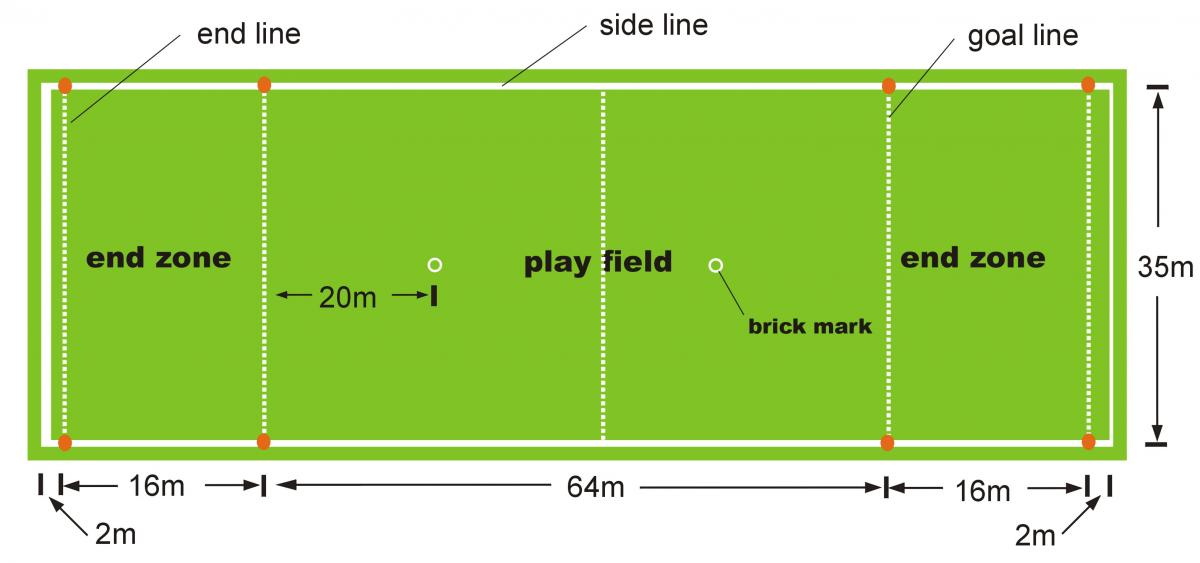
“B” and “C” Division fields are 30 metres wide by 60 metres long plus 12 metre-long end zones; mark half at 30 metres

2. Check the field for garbage and any holes where players may get injured. If there is a hole, either fill it with dirt or place a disc over it so that no one gets hurt. Inform team captains of the hole or disc so that all players are aware.
3. Keep the convener’s bag visible to all players so they can easily find the first aid kit. In the case of a serious injury, call 911. For non-serious injuries, direct them to Guelph General Hospital, 115 Delhi Street.
4. When blowing the whistle, make sure it is loud and sharp. Store the watch and whistle in the outside pocket of the bag. If another team asks how much time is left, please let them know, as it should not be used to your team’s advantage.
5. Games are played rain or shine (but not during lightning and not if the city closes the fields). Cancelled games are not rescheduled. Always show up to the game even if it’s raining as the weather can change very quickly. At the start of the game, the captains are to make the decision to cancel the games. If lightning cancels any game, the rest of the games are also cancelled for the night.
LIGHTNING POLICY: If thunder is heard within 30 seconds of seeing lightning, games will be postponed. All participants must leave the playing area and seek shelter in a building or an automobile. Never stand under trees, in an open field or under an umbrella. Games will resume 15 minutes after the thunder and lightning have moved away. If thunder and lightning are still present 15 minutes after, the game will be cancelled and the score is as it was when the game was stopped.
6. Consumption of alcohol is strictly prohibited. If the league is caught with alcohol at the fields, we could lose our field privileges. Please warn all participants and notify the league convener if a player is found to have alcohol at the field. A player will receive only one warning; the second infraction will result with expulsion from the league without refund.
7. Cleats are allowed, but metal spikes and bare feet are not permitted. Each player must sign a waiver before the first game. If players are added throughout the year, they must sign a waiver before they play, even if they are only playing for one game. Please collect all waivers and submit them to Perpetual Motion the next time you see us. Game sheets should be submitted online using the online score reporter.
8. Have fun and many thanks; without your help, there would not be a league.
A1 Division – 7 vs. 7
This division is recommended for teams and players who would like to play very competitive Ultimate at a high-pace. Players generally have lots of tournament experience and a very strong knowledge of rules and strategies.
A2 Division – 7 vs. 7
This division is recommended for teams and players who would like to play competitive Ultimate at a fairly high-pace. Players generally have quite a bit of tournament experience and a strong knowledge of rules and strategies.
B7 Division – 7 vs. 7
This division is recommended for teams and players who would like to try playing 7’s Ultimate. Players generally have at least a couple years of league experience and are fairly knowledgeable of rules and strategies.
B1 Division – 5 vs. 5
This division is recommended for teams and players who are of high intermediate skill level. Players generally have a few years of league experience, and a good knowledge of rules and strategies, such as the stack.
B2 Division – 5 vs. 5
This division is recommended for teams and players who are of intermediate skill level. Players generally have a couple years of league experience and a decent knowledge of rules and strategies, such as the “stack”.
C1 Division – 5 vs. 5
This division is recommended for teams and players who are of high beginner skill levels. Players generally have at least a year of league experience and a basic knowledge of rules and strategies.
C/C2 Division – 5 vs. 5
This division is recommended for teams and players who are new to the sport of ultimate. Players have less than a year of league experience and have little knowledge of rules and strategies. Players are more focused on learning the game and are less concerned with the skill level.
With over 10 years of league experience, the skill level of ultimate in Guelph is quite high. For players new to the game, even if you are athletic, it is recommended that you start at the “C” level until you develop your catching and throwing skills.
Please see the Perpetual Motion Ultimate Game Sheet.
At the end of each season the Playoff and Spirit Champions are presented with the league trophy. Each teammate on the winning teams are awarded a choice of a T-Shirt, Hat, Visor, Toque or a Water Bottle. Have a look below to see what you can win (or buy) below under “Swag.”
rules
Guelph Ultimate relies upon a spirit of sportsmanship that places the responsibility for fair play on the player. Highly competitive play is encouraged, but never at the expense of mutual respect among competitors, adherence to the agreed upon rules, or the basic joy of play. Protection of these vital elements serves to eliminate unsportsmanlike conduct from the Ultimate field. Actions such as taunting opposing players, dangerous aggression, belligerent intimidation, intentional infractions, or other “win-at-all costs” behavior are contrary to the spirit of the game and must be avoided by all players.
At the end of each game, a spirit score is to be awarded to the opposing team on a scale from 1 to 5 (half scores are permitted). The team as a whole should have input on what spirit score should be awarded to the other team. At the end of the season, there will be a spirit trophy and prizes awarded to the team with the highest spirit average. In addition, if two teams are tied in points at the end of the season, then the team with the highest spirit point average will be placed higher. All teams should try to follow the guidelines set out below in order to keep the system equal for everyone.
Spirit rating = 5
The other team was a great team and we really enjoyed playing against them. They showed up on time and showed great sportsmanship throughout the game. During the game they played by the rules, but if we had a dispute they were open to discuss. This was one of the best spirited teams we have played against, and we are really looking forward to playing against them again.
Spirit rating = 4
The other team was a fun team and we enjoyed playing against most of their players. They showed up on time and showed decent sportsmanship throughout the game. During the game they generally played by the rules, but if we had a dispute they were pretty receptive to discuss. Not a bad team to play against.
Spirit rating = 3
The other team was an O.K. team and we enjoyed playing against only a few of their players. They showed up late and/or showed poor sportsmanship throughout the game. During the game, they really didn’t play by the rules and really didn’t want to learn them either. The captains should discuss what happened so it doesn’t happen again. This wasn’t a fun game and our captain will add a brief comment to the score submission explaining the low spirit score.
Spirit rating = 2
The entirety of the other team was not fun to play against. They showed up very late and/or showed very poor sportsmanship throughout the game. During the game they didn’t play by the rules and didn’t want to learn them either. The captains should discuss what happened so it doesn’t happen again. This wasn’t an enjoyable game and our captain will explain what happened in the score submission.
Spirit rating = 1
The other team was terrible to play against. We did not enjoy playing against any of their players. They showed up very late and/or showed horrible sportsmanship throughout the game. During the game, they were very negligent of the rules and of the safety and enjoyment of our team. They had no desire to learn the rules. This is the least spirited team we have ever played against. Our captain is going to send a report to the league convener explaining what happened.
Any team that defaults a game (because they do not have enough players) will receive a spirit score of 4 for the game and the non-defaulting team will not receive a spirit score (their spirit average will not be affected).
“No set of rules can replace player’s respect for one another and for good spirit.” – Ultimate Players Association, 1993 (c)
The Guelph Ultimate Frisbee A and B7 Division plays by the https://usaultimate.org/rules:
The following rules are a condensed version of the 11th Edition Official UPA rules. With the exceptions of a few rules (no footblocks and 1.5hr time cap), the UPA rules are the basis for all Ultimate Frisbee games.
The most important part of Guelph Ultimate is “The Spirit of the Game”. This is used to describe the respect that every player in the game has for the rules and their fellow players. With no referees existing, the players themselves officiate. Implicit in Guelph Ultimate is the assumption that no one will cheat to gain an unfair advantage. This principle is what makes Guelph Ultimate special to so many people, and all Guelph Ultimate Frisbee players try to keep the Spirit alive by maintaining this high level of trust, no matter how competitive the game becomes.
1. Equipment/Field Set-Up
- Team captains are responsible for bringing a white disc, which is provided by the league, to each game.
- Each team should bring both light and dark coloured shirts to each and every game.
- Cleats are allowed but no metal spikes (Baseball cleats) or bare feet are permitted. Shoes must be closed-toe.
- Each player must sign a waiver before the first game. If you add a player to your team throughout the year, the player must sign a waiver before they play, even if it is only for one game.
- It is the responsibility of both team captains to submit the score of the game and spirit score online by 5:00pm the following day.
- Each convener has a basic first aid kit (ice packs, band aids and tensors) that is stored in the convener’s equipment bag. The convener is the person who blows the whistle to start and end the game.
2. Start Time/Default
- Please arrive 15 minutes early to warm up and to start your games on time.
- Before the game, the captains should flip the disc (like a coin) to determine who will pull and who will receive.
- Games are played rain or shine (but not during lightning and not if the city closes the fields). See cancellation policy below.
- All teams are to play 7 vs. 7 having at least 3 of each gender on the field at all times. The opposing team captain may waive the minimum player requirement AND have the results of the match COUNT towards the standings. Agreeing that the results of the match COUNT must be made clear prior to the start of play by the team captains. Agreeing to play does not infer that the match counts unless this is explicitly decided by the opposing team captain.
- If a team cannot field a squad 10 minutes after the official start time, a default will occur. A team can start a game with 6 people, as long as 2 of the players are women and 2 of the players are men.
- The game begins right at 6:30pm each night. Teams may call a one minute time-out per half, if needed, except in the final 10 minutes of play.
- Games are to 15 points prior to the hard time cap. The first team to reach 15 wins. The hard time cap is ninety minutes, which will be signaled with a whistle. Play continues uninterrupted at the whistle until the point is played out. If the game is tied after the point is played out, a universal point (tie-breaker point) is to be played to determine the winner. Note that the beginning of a point starts immediately after the previous point is scored.
- In the event of a round robin playoff that is posted as a 45 minute game, the game will be completed when the convener blows the whistle at the end of 45 minutes. If the disc is in the air when the whistle is blown, the play will count. A tie will be recorded as a tie.
- If teams have the same number of points (winning percentage is to be used instead of points in the event that teams have played an unequal number of games) at the end of the season, the tiebreaker is as follows: a) highest spirit score average b) head to head (if the two teams that tied played each other, the winner of the game places higher) c) point differentials (counting only games against common opponents) d) points scored (counting only games against all common opponents) e) points against (counting only games against all common opponents) f) flip a disc.
- Teams will switch ends at the half time. Half time is when the first team reaches 8 points. The team that received the disc at the start of the game will huck the disc at the start of the second half.
3. Initiate Play
- Each point begins with both teams lining up on the front of their respective end zone line.
- The defense throws (“pulls”) the disc to the offense.
- The receiving team has the option of catching the disc or letting it fall, but if they attempt to catch it and drop it, it is an automatic turnover. THE “PULL” CANNOT BE KNOCKED DOWN AND PLAYED BY THE RECEIVING TEAM LIKE A BLOCKED PASS DURING REGULAR PLAY!
- Players must play the disc from where it lands, even if it lands in the endzone.
- The receiving team does not have to wait to have the disc “tagged in” off the pull. Whoever retrieves the disc off of a pull, or from any throw that lands out of bounds, must play it. It cannot be handed over to someone else to commence play. If the defense team intercepts the disc in their opponent’s endzone, it is a point for the defense team.
- If the pull goes directly out of bounds, the receiving team may call “middle/brick” and play the disc from the middle of the field at the point where the disc crossed the boundary. Or, they can play it from the brick mark closest to the end zone of the receiving team. The brick mark is 20m from the end zone. If the disc rolls out, “middle/brick” may not be called.
4. Movement of the Disc
- The disc may be advanced in any direction by completing a pass to a teammate.
- Players may not run with the disc.
- The person with the disc (“thrower”) has ten seconds to throw the disc. The defender (“marker”) guarding the thrower counts the stall count out loud, but must be within 3 metres of the thrower to call stalls.
- A player is out-of-bounds when she/he steps on an out-of-bounds area (lines are out-of-bounds). When a player is in the air, his/her in or out-of-bounds is determined by where the first point of contact is with the ground. If any portion of the first point of contact is out-of-bounds, the player is considered out-of-bounds.
- If a disc goes out of bounds, it is a turnover. However, the new offensive team must get the disc “tagged in” by the new defensive team before play begins. A disc that is thrown out of bounds but curves back into play before hitting the ground is still in play.
- A pivot must be established once the disc is caught; moving the pivot is “travelling” and the thrower must go back to their original position and stalls are started at the same point where they were when the call was made. However, If a player catches the disc while running or jumping the player must release a pass without attempting to stop and with setting a pivot provided that: (1) The play does not change direction or increase speed while in possession of the disc; and (2) The pass is released before three additional points of contact with the ground are made after the possession has been established.
5. Scoring
- Each time the offense completes a pass in the defense’s end zone, the offense scores one point. After each score, teams switch sides and play is again initiated. To signal that you are ready, raise your arm in the air to let the other team know.
- In order for the receiver to be considered in the endzone after gaining possession of the disc, his/her first point of contact with the ground must be completely in the endzone.
- A player cannot score by running into the endzone with the disc. Should a receiver’s momentum carry him/her into the endzone after gaining possession, the receiver must carry the disc back to the closest point on the goal line and tap the disc into play from there.
- A receiver who lands with one foot in the endzone and one foot out of the endzone (in effect, straddling the goal line) has scored a point if the foot inside the scoring area was the first point of contact. A receiver who lands with one foot in the endzone and one foot out of the endzone (in effect, straddling the goal line) has not scored a point if both feet touch the ground at the same time and must continue to pass the disc.
6. Change of possession
- When a pass is not completed (e.g. out of bounds, dropped, blocked, intercepted), the defense immediately takes possession of the disc and becomes the offense. A defender may block/knock-down a pass with any part of their body, WITH THE EXCEPTION OF THEIR FEET, as long as no contact is made with the intended receiver.
- After a blocked or missed pass (a “turnover”), the person who touches the disc first for the new offense (from the team who now has the disc) must be the first thrower.
- If two players catch the disc at the same time, the tie goes to the offense.
7. Substitutions
- Substitutions can take place after a point has been made or to replace an injured player.
- The team without the injured player has the right to substitute an equal number of players during an injury substitution.
8. Non-contact
- There should be NO CONTACT! Any physical contact between players results in a foul.
- Picks and screens are also prohibited.
- A defender may not hit the disc out of the thrower’s hands; this is called a “strip.” If a strip occurs, the thrower regains possession and the defender must restart the stall count.
- When defending against the thrower, you must stay 1 disc length away from the thrower. You can not touch the thrower as they throw. However, the thrower may not move their body, arm, hand, etc. into the defender with an established position.
- The Principle of Verticality: All players have the right to the space immediately above them. Thus, a player cannot prevent an opponent from making an attempt on a pass by placing his/her arms above an opponent.
- Should contact occur, the player restricting the vertical area has committed a foul. This is not to say that defending players cannot reach over the intended receiver to intercept the disc, but in doing so they must not limit the intended receiver’s ability to jump, etc.
- Dangerous Play: It is a foul if you create a dangerous play even if there is no contact (i.e. significantly colliding with a mostly stationary opponent, jumping into a group of mostly stationary players, diving around or through a player that results in contact with a player’s back or legs, running without looking when there is a likelihood of other players occupying the space into which the player is traveling, jumping or otherwise leaving the ground where it is likely that a significant collision will result, wild or uncontrolled throwing motions, initiating contact with a player’s head, initiating contact with an airborne player’s lower body that prevents them from landing on their feet, and jumping right in front of a sprinting player in a manner where contact is unavoidable) even if there is no contact. All players must be aware of what is going on around them so that injuries or dangerous situations are avoided.
9. Fouls:
- A foul occurs when a player initiates contact on another player.
- When a foul disrupts possession, the play resumes as if the possession was retained.
- If the player committing the foul disagrees with the foul call, the play is redone.
- If a foul is called, ONLY the player involved in the infraction may contest it.
- If the foul is contested, the disc is returned to where it was originally thrown from and stalls continue from where they were at the time of the initial throw.
- “Picks” are not allowed. Any time a defender’s path is blocked by any offensive players – EITHER INTENTIONALLY OR UNINTENTIONALLY – a foul can be called. Play is stopped, the defender is allowed to regain coverage on the offensive player and stalls continue from where it was when the pick was called.
If the person handling the disc throws it into a hand-block by the defender, IT IS NOT A FOUL. Following through and hitting someone is not a foul, but it SHOULD be avoided in concordance with Spirit of the Game. - It is the responsibility of the thrower to throw around the defender. If a defender hits the disc, hand or arm in an attempt to prevent a throw, IT IS A FOUL.
- Remember that the defender’s hands may only block the path of the disc, not the throwing motion itself.
10. Playoff Eligibility
- Each player must play at least half of the regular season games in order to be able to play in the playoffs, unless it is cleared with the league convener. This prohibits teams from adding “ringers” to their teams for the playoffs.
11. Spirit of the Game
- Guelph Ultimate has traditionally relied upon the Spirit of Sportsmanship, which places the responsibility for fair play on the player.
- Highly competitive play is encouraged, but never at the expense of the bond of mutual respect between players, adherence to the agreed upon rules of the game, or the basic joy of play.
- Protection of these vital elements serves to eliminate adverse conduct from the Guelph Ultimate field. Such actions as the taunting of opposing players, dangerous aggression, intentional fouling, or other “win-at-all-costs” behavior are contrary to the spirit of the game and must be avoided by all players.
- If a foul is committed and not called, the player who committed the foul should call it on themselves.
- Should a dispute or confusion arise on the field, it should be accepted that you stop and resume play with a “disc-in” check when the matter is resolved.
- When a novice commits a violation out of sincere ignorance of the rules, it is common practice to stop play and explain the violation. It is our hope that more experienced teams will assist in the promotion and clarification of the Spirit of the Game and the rules. If a team or person is unclear on something, explain it to them in order to enhance the Guelph Ultimate experience and not to put them at a disadvantage. This will ensure that all games that are played are heading to a higher and more enjoyable level! At the end of each game, each team will vote on a spirit score for the opposing team (See Spirit of the Game). Half scores are permitted.
12. Weather Conditions
- Always show up to the game even if it’s raining as the weather can change very quickly. At the start of the game the captains are to make the decision if the games are to be cancelled. If lightning cancels any game, the rest of the games are cancelled for the night.
- LIGHTNING POLICY: If thunder is heard within 30 seconds of seeing lightning, games will be postponed. All participants must leave the playing area and seek shelter in a building or an automobile. Never stand under trees, in an open field or under an umbrella. Games will resume 15 minutes after the thunder and lightning have moved away. If thunder and lightning are still present 15 minutes after, the game will be cancelled and the score is as it was when the game was stopped. Halftime must be reached (8 points by one team in the A Division) in order for the game to count towards the league standings.
- CANCELLATION POLICY: In the event that games are cancelled due to field closures or poor air quality, the following policy will be applied:
- First Cancellation: Games are not rescheduled or refunded.
- Second Cancellation: Games will be rescheduled as extra games on the night that they play or on another available date. If neither of these scenarios is viable, a partial team credit will be applied in the following season.
- Third Cancellation or more: Games will be rescheduled as extra games on the night that they play or on another available date. If neither of these scenarios is viable, a partial team credit will be applied in the following season.
13. Abuse/Alcohol:
- Any abuse, whether it be physical, sexual, or mental is not acceptable in any manner. If any of these types of abuse are reported, the player or team will receive a verbal warning. If a second incident occurs, the player or team will be asked to leave the league or tournament without refund. Teams are responsible for other teammates’ actions; as a teammate, please encourage good sportsmanship at all times. Perpetual Motion Sports & Entertainment Inc. reserves the right to eject a player or team without a warning and without a refund. The Guelph Ultimate League is to be enjoyable and fun for everyone, let’s keep it that way!
- Alcohol is not permitted at any game or event, and offenders will be asked to leave the league without refund. Playing while intoxicated is also prohibited.
*If you would like to see more rules, please see the UPA (Ultimate Player’s Association) website: https://usaultimate.org/rules
“No set of rules can replace player’s respect for one another and for good spirit.” – Ultimate Players Association, 1993 (c)
Guelph Ultimate’s “B” and “C” Divisions play by https://usaultimate.org/rules with a few changes to make it more enjoyable for new players to the game. Instead of playing 7 vs. 7 as in the “A” Division, the “B” and “C” Divisions play 5 players against 5 players. This allows new players to the game a 1 in 4 chance of handling the disc instead of a 1 in 6 (the more a new player handles the disc, the better they will become in a shorter time). Since there are fewer players, the fields are proportionally smaller. In order to stop players from throwing the “long bomb” every play, a rule is set that you cannot score from inside your own half. This will force teams to work on their short game and improve their handling skills. To keep the games exciting, two 45 minute games are played each night, allowing teams to play more teams in a season. Finally, footblocks are not permitted and are considered fouls. This is for your own safety.
The following rules are a condensed version of the 11th Edition Official UPA rules. With the exceptions of a few rules (no footblocks and a 1.5hr time cap), the UPA rules are the basis for all Ultimate games.
The most important part of Guelph Ultimate is “The Spirit of the Game”. This is used to describe the respect that every player in the game has for the rules and their fellow players. No referees exist. Instead, the players themselves officiate. Implicit in Guelph Ultimate is the assumption that no one will cheat to gain an unfair advantage. This principle is what makes Guelph Ultimate special to so many people, and all Guelph Ultimate players try to keep the Spirit alive by maintaining this high level of trust, despite how competitive the game becomes.
1. Equipment/Field Set-Up
- Team captains are responsible for bringing a white disc, provided by the league, to each game.
Each team should bring both light and dark coloured shirts to each and every game. - Cleats are allowed but no metal spikes (baseball cleats) or bare feet are permitted. Shoes must be closed-toe.
- Each player must sign a waiver before the first game. If you add a player to your team throughout the year, the player must sign a waiver before they play, even if it is only for one game.
- It is the responsibility of both team captains to submit the score of the game and spirit score online by 5:00pm the following day.
- Each convener has a basic first aid kit (ice packs, band aids and tensors) stored in the convener’s equipment bag. The convener is the person who blows the whistle to start and end the game.
2. Start Time/Default
- Please arrive 15 minutes early to warm up and start your games on time.
- Before the game, the captains should flip the disc (like a coin) to determine who will pull and who will receive.
- Games are played rain or shine (but not during lightning and not if the city closes the fields). See cancellation policy below.
- All teams are to play 5 vs. 5, having at least 2 of each gender on the field at all times.
- If a team cannot field a squad 10 minutes after the official start time a default will occur. A team can start a game with 4 people, as long as 2 of the players are women and 2 of the players are men. The opposing team captain may waive the minimum player requirement AND have the results of the match COUNT towards the standings. Agreeing that the results of the match COUNT must be made clear prior to the start of play by the team captains. Agreeing to play does not infer that the match counts unless this is explicitly decided by the opposing team captain.
- The games begin right at 6:30pm and 7:15pm as there are 2 games each night.
- Teams may call a one minute time-out per game, if needed, except in the final 10 minutes of play.
- Games are completed when the convener blows the whistle at the end of 45 minutes. If the disc is in the air when the whistle is blown, the play counts. A tie is recorded as a tie. There will be 2 points awarded for a win, 1 point for a tie and 0 points for a loss.
- In the playoffs, if the game is tied at the end of 45 minutes, the game should be stopped when the whistle blows. Both teams should agree the game is a tie, then the disc should be tapped back in and play continued until the next point is scored.
- If teams have the same number of points (winning percentage is to be used instead of points in the event that teams have played an unequal number of games) at the end of the season, the tiebreaker is as follows: a) highest spirit score average b) head to head (if the two teams tied played each other, the winner of the game places higher) c) point differentials (counting only games against common opponents) d) points scored (counting only games against all common opponents) e) points against (counting only games against all common opponents) f) flip a disc.
3. Initiate Play
- Each point begins with both teams lining up on the front of their respective end zone line.
- The defense throws (“pulls”) the disc to the offense.
- The receiving team has the option of catching the disc or letting it fall, but if they attempt to catch it and drop it, it is an automatic turnover. THE PULL CANNOT BE KNOCKED DOWN AND PLAYED BY THE RECEIVING TEAM LIKE A BLOCKED PASS DURING REGULAR PLAY!
- Players must play the disc from where it lands, even if it lands in the endzone.
- The receiving team does not have to wait to have the disc “tagged in” off the pull. Whoever retrieves the disc off of a pull or from any throw that lands out of bounds must play it. It cannot be handed over to someone else to commence play. If the defense team intercepts the disc in their opponent’s endzone, it is a point for the defense team.
- If the pull goes directly out of bounds, the receiving team may call “middle/brick” and play the disc from the middle of the field at the point where the disc crossed the boundary or from the brick mark closest to the end zone of the receiving team. The brick mark is 15 metres from the end zone. If the disc rolls out, “middle/brick” may not be called.
4. Movement of the Disc
- The disc may be advanced in any direction by completing a pass to a teammate.
- Players may not run with the disc.
- The person with the disc (“thrower”) has ten seconds to throw the disc. The defender (“marker”) guarding the thrower counts the stall count out loud, but must be within 3 metres of the thrower to call stalls.
- A player is out-of-bounds when she/he steps on an out-of-bounds area (lines are out-of-bounds). When a player is in the air, his/her in or out-of-bounds is determined by where the first point of contact is with the ground. If any portion of the first point of contact is out-of-bounds, the player is considered out-of-bounds.
- If a disc goes out of bounds, it is a turnover. However, the new offensive team must get the disc “tagged in” by the new defensive team before play begins. A disc that is thrown out of bounds but curves back into play before hitting the ground is still in play.
- A pivot must be established once the disc is caught; moving the pivot is “travelling” and the thrower must go back to their original position and stalls are started at the same point where they were when the call was made. However, If a player catches the disc while running or jumping the player must release a pass without attempting to stop and with setting a pivot provided that: (1) The play does not change direction or increase speed while in possession of the disc; and (2) The pass is released before three additional points of contact with the ground are made after the possession has been established.
5. Scoring
- Each time the offense completes a pass in the defense’s end zone, the offense scores one point. After each score, teams switch sides and play is again initiated. To signal that you are ready, raise your arm in the air to let the other team know.
- You may not score from a pass thrown before or on the halfway line. This will help the flow of the game and encourage a more skilled approach to Guelph Ultimate. If an offensive player does catch a disc in the endzone that was thrown before half, the defensive team receives the disc on their own goal line. If the disc lands on or before the center line, it is not considered over half and it must be played from where it lands.
- In order for the receiver to be considered in the endzone after gaining possession of the disc, his/her first point of contact with the ground must be completely in the endzone.
- A player cannot score by running into the endzone with the disc. Should a receiver’s momentum carry him/her into the endzone after gaining possession, the receiver must carry the disc back to the closest point on the goal line and tap the disc into play from there.
- A receiver who lands with one foot in the endzone and one foot out of the endzone (in effect, straddling the goal line) has scored a point if the foot inside the scoring area was the first point of contact. A receiver who lands with one foot in the endzone and one foot out of the endzone (in effect, straddling the goal line) has not scored a point if both feet touch the ground at the same time, and must continue to pass the disc.
6. Change of possession
- When a pass is not completed (e.g. out of bounds, dropped, blocked, intercepted), the defense immediately takes possession of the disc and becomes the offense. A defender may block/knock-down a pass with any part of their body, WITH THE EXCEPTION OF THEIR FEET, as long as no contact is made with the intended receiver.
- After a blocked or missed pass (a “turnover”), the person who touches the disc first for the new offense (from the team who now has the disc) must be the first thrower.
- If two players catch the disc at the same time, the tie goes to the offense.
7. Substitutions
- Substitutions can take place after a point has been made or to replace an injured player.
- The team without the injured player has the right to substitute an equal number of players during an injury substitution.
8. Non-contact
- There should be NO CONTACT!
- Any physical contact between players results in a foul.
Picks and screens are also prohibited. - A defender may not hit the disc out of the thrower’s hands; this is called a “strip.” If a strip occurs, the thrower regains possession and the defender must restart the stall count.
- When defending against the thrower, you must stay 1 disc length away from the thrower. You can not touch the thrower as they throw. However, the thrower may not move their body, arm, hand, etc. into the defender with an established position.
- The Principle of Verticality: All players have the right to the space immediately above them. Thus, a player cannot prevent an opponent from making an attempt on a pass by placing his/her arms above an opponent. Should contact occur, the player restricting the vertical area has committed a foul. This is not to say that defending players cannot reach over the intended receiver to intercept the disc, but in doing so they must not limit the intended receiver’s ability to jump, etc.
- Dangerous Play: It is a foul if you create a dangerous play even if there is no contact (i.e. significantly colliding with a mostly stationary opponent, jumping into a group of mostly stationary players, diving around or through a player that results in contact with a player’s back or legs, running without looking when there is a likelihood of other players occupying the space into which the player is traveling, jumping or otherwise leaving the ground where it is likely that a significant collision will result, wild or uncontrolled throwing motions, initiating contact with a player’s head, initiating contact with an airborne player’s lower body that prevents them from landing on their feet, and jumping right in front of a sprinting player in a manner where contact is unavoidable) even if there is no contact. All players must be aware of what is going on around them so that injuries or dangerous situations are avoided.
9. Fouls:
- When a player initiates contact on another player a foul occurs.
- When a foul disrupts possession, the play resumes as if the possession was retained.
If the player committing the foul disagrees with the foul call, the play is redone. - If a foul is called, ONLY the player involved in the infraction may contest it.
- If the foul is contested, the disc is returned to where it was originally thrown from and stalls continue from where they were at the time of the initial throw.
- “Picks” are not allowed. Any time a defender’s path is blocked by any offensive players – EITHER INTENTIONALLY OR UNINTENTIONALLY – a foul can be called. Play is stopped, the defender is allowed to regain coverage on the offensive player, and stalls continue from where it was when the pick was called.
If the person handling the disc throws into a hand block by the defender, IT IS NOT A FOUL. Following through and hitting someone is not a foul, but it SHOULD be avoided in concordance with Spirit of the Game. - It is the responsibility of the thrower to throw around the defender. If a defender hits the disc, hand or arm in an attempt to prevent a throw, IT IS A FOUL. Remember that the defender’s hands may only block the path of the disc, not the throwing motion itself.
10. Playoff Eligibility
- Each player must play at least half of the regular season games in order to be able to play in the playoffs, unless it is cleared with the league convener. This prohibits teams from adding “ringers” to their teams for the playoffs.
11. Spirit of the Game
- Guelph Ultimate has traditionally relied upon the spirit of sportsmanship, which places the responsibility for fair play on the player.
- Highly competitive play is encouraged, but never at the expense of the bond of mutual respect between players, adherence to the agreed upon rules of the game, or the basic joy of play.
- Protection of these vital elements serves to eliminate adverse conduct from the Guelph Ultimate field. Such actions as the taunting of opposing players, dangerous aggression, intentional fouling, or other “win-at-all-costs” behavior are contrary to the spirit of the game and must be avoided by all players.
- If a foul is committed and not called, the player who committed the foul should call it on themselves.
- Should a dispute or confusion arise on the field, it should be accepted that you stop and resume play with a “disc-in” check when the matter is resolved.
- When a novice commits a violation out of sincere ignorance of the rules, it is common practice to stop play and explain the violation. It is our hope that more experienced teams will assist in the promotion and clarification of the Spirit of the Game and the rules. If a team or person is unclear on something, explain it to them in order to enhance the Guelph Ultimate experience and not to put them at a disadvantage. This will ensure that all games that are played are heading to a higher and more enjoyable level! At the end of each game, each team will vote on a spirit score for the opposing team (See Spirit of the Game). Half scores are permitted.
12. Weather Conditions
- Always show up to the game even if it’s raining as the weather can change very quickly. At the start of the game the captains are to make the decision if the games are to be cancelled. If lightning cancels any game, the rest of the games are cancelled for the night.
- LIGHTNING POLICY: If thunder is heard within 30 seconds of seeing lightning, games will be postponed. All participants must leave the playing area and seek shelter in a building or an automobile. Never stand under trees, in an open field or under an umbrella. Games will resume 15 minutes after the thunder and lightning have moved away. If thunder and lightning are still present 15 minutes after, the game will be cancelled and the score is as it was when the game was stopped. Halftime must be reached (8 points by one team in the A Division) in order for the game to count towards the league standings.
- CANCELLATION POLICY: In the event that games are cancelled due to field closures or poor air quality, the following policy will be applied:
- First Cancellation: Games are not rescheduled or refunded.
- Second Cancellation: Games will be rescheduled as extra games on the night that they play or on another available date. If neither of these scenarios is viable, a partial team credit will be applied in the following season.
- Third Cancellation or more: Games will be rescheduled as extra games on the night that they play or on another available date. If neither of these scenarios is viable, a partial team credit will be applied in the following season.
13. Abuse/Alcohol:
- Any abuse, whether it be physical, sexual, or mental is not acceptable in any manner. If any of these types of abuse are reported, the player or team will receive a verbal warning. If a second incident occurs, the player or team will be asked to leave the league or tournament without refund. Teams are responsible for other teammates’ actions; as a teammate, please encourage good sportsmanship at all times. Perpetual Motion Sports & Entertainment Inc. reserves the right to eject a player or team without a warning and without a refund. The Guelph Ultimate League is to be enjoyable and fun for everyone, let’s keep it that way!
- Alcohol is not permitted at any game or event, and offenders will be asked to leave the league without refund. Playing while intoxicated is also prohibited.
*If you would like to see more rules, please see the UPA (Ultimate Player’s Association) website: https://usaultimate.org/rules
“No set of rules can replace player’s respect for one another and for good spirit.” – Ultimate Players Association, 1993 (c)
The Guelph Ultimate A and B7 Division plays by the https://usaultimate.org/rules:
The following rules are a condensed version of the USA Ultimate rules. With some exception of a few rules, the rules are the basis for all Guelph Ultimate games. The exceptions are as follows:
- Footblocks are not permitted.
- Games 55 minutes hard time cap. If the game starts late, your game is shortened to the time slot your game was allotted (be there on time).
- Teams can sub on the fly, players must tag their teammate on the sideline beside the players bench before entering the field (no running up and down the sideline to sub in).
- Absolutely no food, soft drinks, gatorade, gum, etc… Water is the only drink permitted in the facility.
- After a point is scored, the disc is self-checked with the pivot foot at the spot where the point was scored.
- The spot where the point was scored is the location of the catch in the endzone, not necessarily were the disc was placed by the scorer if it varies from the location of the catch.
- The huck is taken from the back line. The receiving team must be behind the back line as well.
Teams can use any colour of disc as a game disc as long is it agreed on by both teams, otherwise a white disc is to be used. - Halftime will be taken the first point after 25 minutes have elapsed. Halftime is one minute.
- Players are allowed to wear cleats in Marden Field House, U of G Field House and Guelph Soccer Dome but they must be clean of any dirt. Running shoes and indoor field shoes are also permitted, but no outdoor shoes (i.e. can not wear shoes in from outside). Please do not walk on the turf with street shoes.
- Captains are responsible for keeping track of time, setting the field up and tearing it down. Equipment will be provided.
- If a disc gets caught in the light standard you must inform the dome tenant on duty to retrieve it with a ladder, under no circumstances do not attempt to climb the light standard.
- For the B7 Division: Teams are not allowed to bring a substitute on to their team during the regular season, unless they have less than 6 males or 4 females present from their roster. If partway through the game one of their players on their roster shows up, the sub is then replaced if the team has more than 6 males and 4 females. Teams are allowed to change their roster up until the playoffs.
- For the B7 Division: Rosters must be updated on the electronic registration program for substitutes not already rostered to another team (before they play). Players can only be on one teams roster. Each player must play at least half of the regular season games in order to be able to play in the playoffs, unless it is cleared with the league convener. No substitute players are allowed to play during the playoffs, unless it is cleared with the league convener.
- There is two overhead wires in the University of Guelph Dome that is used to support a screen that divides the playing field in half. If the disc touches this overhead wire above the playing area of the field, the disc is dead regardless of the outcome after touching the wire. The disc goes back to the thrower. The stall count resets to the stall count at the time of the throw or at a stall count of 6 if the stall count was over 5.
- The brick mark is 10 meters from the front of the endzone at the U of G Dome and Marden Field House and the yellow dot at the Guelph Soccer Dome.
- The 10-second stall count is replaced by an 8-second stall count. In every situation where the stall count usually goes back to 5 (ex. contested foul), the stall count will go back to 4.
The most important part of Guelph Ultimate is “The Spirit of the Game”. This is used to describe the respect that every player in the game has for the rules and their fellow players. No referees exist. Instead, the players themselves officiate. Implicit in Guelph Ultimate is the assumption that no one will cheat to gain an unfair advantage. This principle is what makes Guelph Ultimate special to so many people, and all Guelph Ultimate players try to keep the Spirit alive by maintaining this high level of trust, despite how competitive the game becomes.
1. Equipment/Field Set-Up
- Team captains are responsible for bringing a white disc provided by the league to each game.
- Each team should bring both light and dark coloured shirts to each and every game.
- Cleats are allowed, but no metal spikes (baseball cleats) or bare feet are permitted. Shoes must be closed-toe.
- Each player must sign a waiver before the first game. If you add a player to your team throughout the year, the player must sign a waiver before they play, even if it is only for one game.
- It is the responsibility of both team captains to submit the score of the game and spirit score online by 5:00pm the following day.
- There will be a basic first aid kit (ice packs, band aids and tensors) stored in the equipment bag.
2. Start Time/Default
- Please arrive 15 minutes early to warm up and start your games on time.
- Before the game, the captains should flip the disc (like a coin) to determine who will pull and who will receive.
- All teams are to play 6 vs. 6, having at least 2 of each gender on the field at all times.
- If a team cannot field a squad 10 minutes after the official start time, a default will occur.
- A team can start a game with 5 people, as long as 2 of the players are women and 2 of the players are men. The opposing team captain may waive the minimum player requirement AND have the results of the match COUNT towards the standings. Agreeing that the results of the match COUNT must be made clear prior to the start of play by the team captains. Agreeing to play does not infer that the match counts unless this is explicitly decided by the opposing team captain.
- Teams may call a one minute time-out per half, if needed, except in the final 10 minutes of play.
Games are completed when the whistle blows at the end of 55 minutes. If the disc is in the air when the whistle is blown, the continuation play counts. A tie is recorded as a tie. There will be 2 points awarded for a win, 1 point for a tie and 0 points for a loss. In the playoffs, if it is tied at the end of 55 minutes, the game should be stopped, at which point the teams will agree the game is a tie. The disc is then tapped back in at the same place before the whistle blew and play is continued until the next point is scored. - In the event of a round robin playoff that is posted as a 45 minute game, the game will be completed when the convener blows the whistle at the end of 45 minutes. If the disc is in the air when the whistle is blown, the play will count. A tie will be recorded as a tie.
- If teams have the same number of points (winning percentage is to be used instead of points in the event that teams have played an unequal number of games) at the end of the season, the tiebreaker is as follows: a) highest spirit score average b) head to head (if the two teams tied played each other, the winner of the game places higher) c) point differentials (counting only games against common opponents) d) points scored (counting onlt games against all common opponents) e) points against (counting only games against all common opponents) f) flip a disc.
- Teams will switch ends at half time. Half time occurs as soon as the first point scored after 25 minutes have elapsed occurs. The team that received the disc at the start of the game will huck the disc at the start of the second half.
3. Initiate Play
- Each point begins with both teams lining up on the front of their respective end zone line.
- The defense throws (“pulls”) the disc to the offense.
- The receiving team has the option of catching the disc or letting it fall, but if they attempt to catch it and drop it, it is an automatic turnover. THE PULL CANNOT BE KNOCKED DOWN AND PLAYED BY THE RECEIVING TEAM LIKE A BLOCKED PASS DURING REGULAR PLAY!
- Players must play the disc from where it lands, even if it lands in the endzone.
- The receiving team does not have to wait to have the disc “tagged in” off the pull. Whoever retrieves the disc off of a pull or from any throw that lands out of bounds must play it. It cannot be handed over to someone else to commence play. If the defense team intercepts the disc in their opponent’s endzone, it is a point for the defense team.
- If the pull goes directly out of bounds, the receiving team may call “middle/brick” and play the disc from the middle of the field at the point where the disc crossed the boundary or from the brick mark closest to the end zone of the receiving team. The brick mark is 15 metres from the end zone. If the disc rolls out, “middle/brick” may not be called.
4. Movement of the Disc
- The disc may be advanced in any direction by completing a pass to a teammate.
- Players may not run with the disc.
- The person with the disc (“thrower”) has eight seconds to throw the disc. The defender (“marker”) guarding the thrower counts out loud the stall count, but must be within 3 metres of the thrower to call stalls.
- A player is out-of-bounds when s/he steps on an out-of-bounds area (lines are out-of-bounds). When a player is in the air, his/her being in or out-of-bounds is determined by where the first point of contact is with the ground. If any portion of the first point of contact is out-of-bounds, the player is considered out-of-bounds.
- If a disc goes out of bounds, it is a turnover. However, the new offensive team must get the disc “tagged in” by the new defensive team before play begins. A disc that is thrown out of bounds but curves back into play before hitting the ground is still in play.
- A pivot must be established once the disc is caught; moving the pivot is “travelling” and the thrower must go back to their original position and stalls are started at the same point where they were when the call was made. However, If a player catches the disc while running or jumping the player must release a pass without attempting to stop and with setting a pivot provided that: (1) The play does not change direction or increase speed while in possession of the disc; and (2) The pass is released before three additional points of contact with the ground are made after the possession has been established.
5. Scoring
- Each time the offense completes a pass in the defense’s end zone, the offense scores one point. After each score, teams switch sides and play is again initiated. To signal that you are ready, raise your arm in the air to let the other team know.
- In order for the receiver to be considered in the endzone after gaining possession of the disc, his/her first point of contact with the ground must be completely in the endzone.
- A player cannot score by running into the endzone with the disc. Should a receiver’s momentum carry him/her into the endzone after gaining possession, the receiver must carry the disc back to the closest point on the goal line and tap the disc into play from there.
- A receiver who lands with one foot in the endzone and one foot out of the endzone (in effect, straddling the goal line) has scored a point if the foot inside the scoring area was the first point of contact. A receiver who lands with one foot in the endzone and one foot out of the endzone (in effect, straddling the goal line) has not scored a point if both feet touch the ground at the same time, and must continue to pass the disc.
6. Change of possession
- When a pass is not completed (e.g. out of bounds, dropped, blocked, intercepted), the defense immediately takes possession of the disc and becomes the offense. A defender may block/knock-down a pass with any part of their body, WITH THE EXCEPTION OF THEIR FEET, as long as no contact is made with the intended receiver.
- After a blocked or missed pass (a “turnover”), the person who touches the disc first for the new offense (from the team who now has the disc) must be the first thrower.
- If two players catch the disc at the same time, the tie goes to the offense.
7. Substitutions
- Teams can sub on the fly; please tag your teammate on the sideline beside the player’s bench before entering the field (you are not permitted to run up and down the sideline to sub in)
- The team without the injured player has the right to substitute an equal number of players during an injury substitution.
8. Non-contact
- There should be NO CONTACT!
- Any physical contact between players results in a foul.
- Picks and screens are also prohibited.
- A defender may not hit the disc out of the thrower’s hands; this is called a “strip.” If a strip occurs, the thrower regains possession and the defender must restart the stall count.
- When defending against the thrower, you must stay 1 disc length away from the thrower. You can not touch the thrower as they throw. However, the thrower may not move their body, arm, hand, etc. into the defender with an established position.
- The Principle of Verticality: All players have the right to the space immediately above them. Thus, a player cannot prevent an opponent from making an attempt on a pass by placing his/her arms above an opponent. Should contact occur, the player restricting the vertical area has committed a foul. This is not to say that defending players cannot reach over the intended receiver to intercept the disc, but in doing so they must not limit the intended receiver’s ability to jump, etc.
- Dangerous Play: It is a foul if you create a dangerous play even if there is no contact (i.e. significantly colliding with a mostly stationary opponent, jumping into a group of mostly stationary players, diving around or through a player that results in contact with a player’s back or legs, running without looking when there is a likelihood of other players occupying the space into which the player is traveling, jumping or otherwise leaving the ground where it is likely that a significant collision will result, wild or uncontrolled throwing motions, initiating contact with a player’s head, initiating contact with an airborne player’s lower body that prevents them from landing on their feet, and jumping right in front of a sprinting player in a manner where contact is unavoidable) even if there is no contact. All players must be aware of what is going on around them so that injuries or dangerous situations are avoided.
9. Fouls:
- When a player initiates contact on another player, a foul occurs.
- When a foul disrupts possession, the play resumes as if the possession was retained.
- If the player committing the foul disagrees with the foul call, the play is redone.
- If a foul is called, ONLY the player involved in the infraction may contest it.
- If the foul is contested, the disc is returned to where it was originally thrown from and stalls continue from where they were at the time of the initial throw.
“Picks” are not allowed. Any time a defender’s path is blocked by any offensive players – EITHER INTENTIONALLY OR UNINTENTIONALLY – a foul can be called. Play is stopped, the defender is allowed to regain coverage on the offensive player, and stalls continue from where it was when the pick was called. - If the person handling the disc throws into a hand block by the defender, IT IS NOT A FOUL. Following through and hitting someone is not a foul, but it SHOULD be avoided in concordance with Spirit of the Game.
- It is the responsibility of the thrower to throw around the defender. If a defender hits the disc, hand or arm in an attempt to prevent a throw, IT IS A FOUL. Remember that the defender’s hands may only block the path of the disc, not the throwing motion itself.
10. Playoff Eligibility
- Each player must play at least half of the regular season games in order to be able to play in the playoffs, unless it is cleared with the league convener. This prohibits teams from adding “ringers” to their teams for the playoffs.
11. Spirit of the Game
- Guelph Ultimate has traditionally relied upon the spirit of sportsmanship, which places the responsibility for fair play on the player.
- Highly competitive play is encouraged, but never at the expense of the bond of mutual respect between players, adherence to the agreed upon rules of the game, or the basic joy of play.
- Protection of these vital elements serves to eliminate adverse conduct from the Guelph Ultimate field. Such actions as the taunting of opposing players, dangerous aggression, intentional fouling, or other “win-at-all-costs” behavior, are contrary to the spirit of the game and must be avoided by all players.
- If a foul is committed and not called, the player who committed the foul should call it on themselves.
Should a dispute or confusion arise on the field, it should be accepted that you stop and resume play with a “disc-in” check when the matter is resolved. - When a novice commits a violation out of sincere ignorance of the rules, it is common practice to stop play and explain the violation. It is our hope that more experienced teams will assist in the promotion and clarification of the Spirit of the Game and the rules. If a team or person is unclear on something, explain it to them in order to enhance the Guelph Ultimate experience and not to put them at a disadvantage.
- This will ensure that all games that are played are heading to a higher and more enjoyable level! At the end of each game, each team will vote on a spirit score for the opposing team (See Spirit of the Game). Half scores are permitted.
12. Weather Conditions
- Snow Storm Policy: In the event of a snow storm, please check the website to see if the games are on.
- CANCELLATION POLICY: In the event that games are cancelled due to field closures or other issues, the following policy will be applied:
- First Cancellation: Games are not rescheduled or refunded.
- Second Cancellation: Games will be rescheduled as extra games on the night that they play or on another available date. If neither of these scenarios is viable, a partial team credit will be applied in the following season.
- Third Cancellation or more: Games will be rescheduled as extra games on the night that they play or on another available date. If neither of these scenarios is viable, a partial team credit will be applied in the following season.
- If a game is cancelled partway through a game, the halfway point of the game must be reached (27 minutes) in order for the game to count towards the league standings.
- If the halfway point of the game has been reached, it is considered a complete game (not a cancellation)
13. Abuse/Alcohol:
- Any abuse, whether it be physical, sexual, or mental is not acceptable in any manner. If any of these types of abuse are reported, the player or team will receive a verbal warning. If a second incident occurs, the player or team will be asked to leave the league or tournament without refund. Teams are responsible for other teammates’ actions; as a teammate, please encourage good sportsmanship at all times. Perpetual Motion Sports & Entertainment Inc. reserves the right to eject a player or team without a warning and without a refund. The Guelph Ultimate League is to be enjoyable and fun for everyone, let’s keep it that way!
- Alcohol is not permitted at any game or event, and offenders will be asked to leave the league without refund. Playing while intoxicated is also prohibited.
*If you would like to see more rules, please see the UPA (Ultimate Player’s Association) website: https://usaultimate.org/rules
“No set of rules can replace player’s respect for one another and for good spirit.” – Ultimate Players Association, 1993 (c)
The Guelph Ultimate B2 and C Division plays by https://usaultimate.org/rules:
The following rules are a condensed version of the rules. With some exception of a few rules, the USA rules are the basis for all Ultimate games. The exceptions are as follows:
- Footblocks are not permitted.
- Games 55 minutes hard time cap. If the game starts late, your game is shortened to the time slot your game was allotted (be there on time).
- Teams can sub on the fly, players must tag their teammate on the sideline beside the players bench before entering the field (no running up and down the sideline to sub in).
- Absolutely no food, soft drinks, gatorade, gum, etc… Water is the only drink permitted in the facility.
- After a point is scored, the disc is self-checked with the pivot foot at the spot where the point was scored. The spot where the point was scored is the location of the catch in the endzone, not necessarily were the disc was placed by the scorer if it varies from the location of the catch.
- The huck is taken from the back line, the receiving team must be behind the back line as well.
- Teams can use any colour of disc at a game disc as long is it agreed on by both teams, otherwise a white disc is to be used.
- Halftime will be taken the first point after 25 minutes have elapsed. Halftime is one minute.
- Players are allowed to wear cleats in Marden Field House, U of G Field House and Guelph Soccer Dome but they must be clean of any dirt. Running shoes and indoor field shoes are also permitted, but no outdoor shoes (i.e. can not wear shoes in from outside). Please do not walk on the turf with street shoes.
- Captains are responsible for keeping track of time, setting the field up and tearing it down. Equipment will be provided.
- If a disc gets caught in the light standard, you must inform the dome tenant on duty to retrieve it with a ladder. Under no circumstances do you attempt to climb the light standard.
- Teams are not allowed to bring a substitute on to their team during the regular season, unless they have less than 5 males or 4 females present from their roster. If partway through the game one of their players on their roster shows up, the sub is then replaced if the team has more than 5 males and 4 females. Teams are allowed to change their roster up until the playoffs. Each player must play at least half of the regular season games in order to be able to play in the playoffs, unless it is cleared with the league convener. No substitute players are allowed to play during the playoffs, unless it is cleared with the league convener.
- There are two overhead wires in the University of Guelph Dome that are used to support a screen that divides the playing field in half. If the disc touches this overhead wire above the playing area of the field, the disc is dead regardless of the outcome of the disc after touching the wire. The disc goes back to the thrower. The stall count resets to the stall count at the time of the throw or at a stall count of 6 if the stall count was over 5.
- The brick mark is 10 meters from the front of the endzone at the U of G Dome and Marden Field House and the yellow dot at the Guelph Soccer Dome.
- The 10-second stall count is replaced by an 8-second stall count. In every situation where the stall count usually goes back to 5 (ex. contested foul), the stall count will go back to 4.
The most important part of Ultimate is “The Spirit of the Game”. This is used to describe the respect that every player in the game has for the rules and their fellow players. No referees exist. Instead, the players themselves officiate. Implicit in Guelph Ultimate is the assumption that no one will cheat to gain an unfair advantage. This principle is what makes Guelph Ultimate special to so many people, and all Guelph Ultimate players try to keep the Spirit alive by maintaining this high level of trust, despite how competitive the game becomes.
1. Equipment/Field Set-Up
- Team captains are responsible for bringing a white disc provided by the league to each game.
- Each team should bring both light and dark coloured shirts to each and every game.
- Cleats are allowed but no metal spikes (baseball cleats) or bare feet are permitted. Shoes must be closed-toe.
- Each player must sign a waiver before the first game. If you add a player to your team throughout the year, the player must sign a waiver before they play, even if it is only for one game.
- It is the responsibility of both team captains to submit the score of the game and spirit score online by 5:00pm the following day.
- There will be a basic first aid kit (ice packs, band aids and tensors) stored in the equipment bag.
2. Start Time/Default
- Please arrive 15 minutes early to warm up and start your games on time.
- Before the game, the captains should flip the disc (like a coin) to determine who will pull and who will receive.
- All teams are to play 5 vs. 5 having at least 2 of each gender on the field at all times. The opposing team captain may waive the minimum player requirement AND have the results of the match COUNT towards the standings. Agreeing that the results of the match COUNT must be made clear prior to the start of play by the team captains. Agreeing to play does not infer that the match counts unless this is explicitly decided by the opposing team captain.
- If a team cannot field a squad 10 minutes after the official start time a default will occur.
- A team can start a game with 4 people, as long as 2 of the players are women and 2 of the players are men.
- Teams may call a one minute time-out per half, if needed, except in the final 10 minutes of play.
- Games are completed when the whistle blows at the end of 55 minutes. If the disc is in the air when the whistle is blown, the continuation play counts. A tie is recorded as a tie. There will be 2 points awarded for a win, 1 point for a tie and 0 points for a loss. In the playoffs, if it is tied at the end of the 55 minutes, the game should be stopped, at which point the teams will agree the game is a tie. The disc is then tapped back in at the same place before the whistle blew and play is continued until the next point is scored.
- In the event of a round robin playoff that is posted as a 45 minute game, the game will be completed when the convener blows the whistle at the end of 45 minutes. If the disc is in the air when the whistle is blown, the play will count. A tie will be recorded as a tie.
- If teams have the same number of points (winning percentage is to be used instead of points in the event that teams have played an unequal number of games) at the end of the season, the tiebreaker is as follows: a) highest spirit score average b) head to head (if the two teams tied played each other, the winner of the game places higher) c) point differentials (counting only games against common opponents) d) points scored (counting games against all common opponents) e) points against (counting games against all common opponents) f) flip a disc.
- Teams will switch ends at half time. Half time occurs as soon as the first point scored after 25 minutes has elapsed occurs. The team that received the disc at the start of the game will huck the disc at the start of the second half.
3. Initiate Play
- Each point begins with both teams lining up on the front of their respective end zone line.
- The defense throws (“pulls”) the disc to the offense.
- The receiving team has the option of catching the disc or letting it fall, but if they attempt to catch it and drop it, it is an automatic turnover. THE PULL CANNOT BE KNOCKED DOWN AND PLAYED BY THE RECEIVING TEAM LIKE A BLOCKED PASS DURING REGULAR PLAY!
- Players must play the disc from where it lands, even if it lands in the endzone.
- The receiving team does not have to wait to have the disc “tagged in” off the pull. Whoever retrieves the disc off of a pull or from any throw that lands out of bounds, must play it. It cannot be handed over to someone else to commence play. If the defense team intercepts the disc in their opponent’s endzone, it is a point for the defense team.
- If the pull goes directly out of bounds, the receiving team may call “middle/brick” and play the disc from the middle of the field at the point where the disc crossed the boundary or from the brick mark closest to the end zone of the receiving team. The brick mark is 15 metres from the end zone. If the disc rolls out, “middle/brick” may not be called.
4. Movement of the Disc
- The disc may be advanced in any direction by completing a pass to a teammate.
- Players may not run with the disc.
- The person with the disc (“thrower”) has eight seconds to throw the disc. The defender (“marker”) guarding the thrower counts out loud the stall count, but must be within 3 metres of the thrower to call stalls.
- A player is out-of-bounds when she/he steps on an out-of-bounds area (lines are out-of-bounds). When a player is in the air, his/her being in or out-of-bounds is determined by where the first point of contact is with the ground. If any portion of the first point of contact is out-of-bounds, the player is considered out-of-bounds.
- If a disc goes out of bounds it is a turnover. However, the new offensive team must get the disc “tagged in” by the new defensive team, before play begins. A disc that is thrown out of bounds but curves back into play before hitting the ground is still in play.
- A pivot must be established once the disc is caught; moving the pivot is “travelling” and the thrower must go back to their original position and stalls are started at the same point where they were when the call was made. However, If a player catches the disc while running or jumping the player must release a pass without attempting to stop and with setting a pivot provided that: (1) The play does not change direction or increase speed while in possession of the disc; and (2) The pass is released before three additional points of contact with the ground are made after the possession has been established.
5. Scoring
- Each time the offense completes a pass in the defense’s end zone, the offense scores one point. After each score, teams switch sides and play is again initiated. To signal that you are ready, raise your arm in the air to let the other team know.
- In order for the receiver to be considered in the endzone after gaining possession of the disc, his/her first point of contact with the ground must be completely in the endzone.
- A player cannot score by running into the endzone with the disc. Should a receiver’s momentum carry him/her into the endzone after gaining possession, the receiver must carry the disc back to the closest point on the goal line and tap the disc into play from there.
- A receiver who lands with one foot in the endzone and one foot out of the endzone (in effect, straddling the goal line) has scored a point if the foot inside the scoring area was the first point of contact. A receiver who lands with one foot in the endzone and one foot out of the endzone (in effect, straddling the goal line) has not scored a point if both feet touch the ground at the same time, and must continue to pass the disc.
6. Change of possession
- When a pass is not completed (e.g. out of bounds, dropped, blocked, intercepted), the defense immediately takes possession of the disc and becomes the offense. A defender may block/knock-down a pass with any part of their body, WITH THE EXCEPTION OF THEIR FEET, as long as no contact is made with the intended receiver.
- After a blocked or missed pass (a “turnover”), the person who touches the disc first for the new offense (from the team who now has the disc) must be the first thrower.
- If two players catch the disc at the same time, the tie goes to the offense.
7. Substitutions
- Teams can sub on the fly; please tag your teammate on the sideline beside the player’s bench before entering the field (you are not permitted to run up and down the sideline to sub in)
- The team without the injured player has the right to substitute an equal number of players during an injury substitution.
8. Non-contact
- There should be NO CONTACT!
- Any physical contact between players results in a foul.
- Picks and screens are also prohibited.
- A defender may not hit the disc out of the thrower’s hands; this is called a “strip.” If a strip occurs, the thrower regains possession and the defender must restart the stall count.
- When defending against the thrower, you must stay 1 disc length away from the thrower. You can not touch the thrower as they throw. However, the thrower may not move their body, arm, hand, etc. into the defender with an established position.
- The Principle of Verticality: All players have the right to the space immediately above them. Thus, a player cannot prevent an opponent from making an attempt on a pass by placing his/her arms above an opponent. Should contact occur, the player restricting the vertical area has committed a foul. This is not to say that defending players cannot reach over the intended receiver to intercept the disc, but in doing so they must not limit the intended receiver’s ability to jump, etc.
- Dangerous Play: It is a foul if you create a dangerous play even if there is no contact (i.e. significantly colliding with a mostly stationary opponent, jumping into a group of mostly stationary players, diving around or through a player that results in contact with a player’s back or legs, running without looking when there is a likelihood of other players occupying the space into which the player is traveling, jumping or otherwise leaving the ground where it is likely that a significant collision will result, wild or uncontrolled throwing motions, initiating contact with a player’s head, initiating contact with an airborne player’s lower body that prevents them from landing on their feet, and jumping right in front of a sprinting player in a manner where contact is unavoidable) even if there is no contact. All players must be aware of what is going on around them so that injuries or dangerous situations are avoided.
9. Fouls:
- When a player initiates contact on another player, a foul occurs.
- When a foul disrupts possession, the play resumes as if the possession was retained.
If the player committing the foul disagrees with the foul call, the play is redone. - If a foul is called, ONLY the player involved in the infraction may contest it.
- If the foul is contested, the disc is returned to where it was originally thrown from and stalls continue from where they were at the time of the initial throw.
- “Picks” are not allowed. Any time a defender’s path is blocked by any offensive players – EITHER INTENTIONALLY OR UNINTENTIONALLY – a foul can be called. Play is stopped, the defender is allowed to regain coverage on the offensive player, and stalls continue from where it was when the pick was called.
If the person handling the disc throws into a hand block by the defender, IT IS NOT A FOUL. Following through and hitting someone is not a foul, but it SHOULD be avoided in concordance with Spirit of the Game. - It is the responsibility of the thrower to throw around the defender. If a defender hits the disc, hand or arm in an attempt to prevent a throw, IT IS A FOUL. Remember that the defender’s hands may only block the path of the disc, not the throwing motion itself.
10. Playoff Eligibility
- Each player must play at least half of the regular season games in order to be able to play in the playoffs, unless it is cleared with the league convener. This prohibits teams from adding “ringers” to their teams for the playoffs.
11. Spirit of the Game
- Guelph Ultimate has traditionally relied upon the spirit of sportsmanship, which places the responsibility for fair play on the player.
- Highly competitive play is encouraged, but never at the expense of the bond of mutual respect between players, adherence to the agreed upon rules of the game, or the basic joy of play.
- Protection of these vital elements serves to eliminate adverse conduct from the Guelph Ultimate field. Such actions as the taunting of opposing players, dangerous aggression, intentional fouling, or other “win-at-all-costs” behavior, are contrary to the spirit of the game and must be avoided by all players.
- If a foul is committed and not called, the player who committed the foul should call it on themselves.
Should a dispute or confusion arise on the field, it should be accepted that you stop and resume play with a “disc-in” check when the matter is resolved. - When a novice commits a violation out of sincere ignorance of the rules, it is common practice to stop play and explain the violation. It is our hope that more experienced teams will assist in the promotion and clarification of the Spirit of the Game and the rules. If a team or person is unclear on something, explain it to them in order to enhance the Guelph Ultimate experience and not to put them at a disadvantage.
- This will ensure that all games that are played are heading to a higher and more enjoyable level! At the end of each game, each team will vote on a spirit score for the opposing team (See Spirit of the Game). Half scores are permitted.
12. Weather Conditions
- Snow Storm Policy: In the event of a snow storm, please check the website to see if the games are on.
- CANCELLATION POLICY: In the event that games are cancelled due to field closures or other issues, the following policy will be applied:
- First Cancellation: Games are not rescheduled or refunded.
- Second Cancellation: Games will be rescheduled as extra games on the night that they play or on another available date. If neither of these scenarios is viable, a partial team credit will be applied in the following season.
- Third Cancellation or more: Games will be rescheduled as extra games on the night that they play or on another available date. If neither of these scenarios is viable, a partial team credit will be applied in the following season.
- If a game is cancelled partway through a game, the halfway point of the game must be reached (27 minutes) in order for the game to count towards the league standings.
- If the halfway point of the game has been reached, it is considered a complete game (not a cancellation)
13. Abuse/Alcohol:
- Any abuse, whether it be physical, sexual, or mental is not acceptable in any manner. If any of these types of abuse are reported, the player or team will receive a verbal warning. If a second incident occurs, the player or team will be asked to leave the league or tournament without refund. Teams are responsible for other teammates’ actions; as a teammate, please encourage good sportsmanship at all times. Perpetual Motion Sports & Entertainment Inc. reserves the right to eject a player or team without a warning and without a refund. The Guelph Ultimate League is to be enjoyable and fun for everyone, let’s keep it that way!
- Alcohol is not permitted at any game or event, and offenders will be asked to leave the league without refund. Playing while intoxicated is also prohibited.
*If you would like to see more rules, please see the UPA (Ultimate Player’s Association) website: https://usaultimate.org/rules
1. The Field – Typically a score field is divided in half, the long way and the 2 games are played beside each other. An “A” and “B7” Division ultimate field is 70 yards (64m) by 40 yards (37m). The endzones are 25 yards (23m) deep. The fields in the “B” and “C” divisions are smaller as there are fewer players on the field.
2. Starting Play – In the “A” and “B7” Division, there are seven players per team (5 players in the “B” and “C” Divisions). At the beginning of each point, teams line up across the front of their endzone. The team with the disc will pull (i.e. throw) the disc to the other team. A pull starts the game.
3. Movement of the disc – The offensive team can move the disc in any direction by successfully completing a pass to a teammate. Once a player has the disc, they cannot run with it. Only one defensive player is allowed to guard the handler (i.e. the player who currently holds the disc). All other defensive players must be at least 10 feet away.
4. The Stall Count – The player with the disc (i.e. the thrower or handler) has ten seconds to throw it. The defender guarding the thrower (i.e. the marker) will establish this ten count (or stall count).
5. Change of Possession (Turnover) – When a pass in not completed (e.g. out of bounds, drop, block, interception) or a ten count occurs, the defense immediately takes possession of the disc and becomes the offense. This is called a turnover.
6. Scoring – When the offense completes a pass into the opposing endzone, this is a point.
7. Contact – No physical contact is allowed in the game of ultimate. Picks and screens are also prohibited as they often lead to injury.
8. Fouls – When a player initiates contact on another player, a foul occurs. The player who was fouled must immediately yell “foul” and the play promptly stops. If a foul call disrupts possession, the play resumes as if the possession was retained. If the player committing the foul disagrees with the foul call, the play is redone.
9. Self-Refereeing – Players are responsible for their own foul and line calls. Players resolve their own disputes. There are no referees.
10. Spirit of the Game – Ultimate’s underlying philosophy is sportsmanship and fair play. Competitive play is encouraged, but never be at the expense of respect between players, adherence to the rules and the basic joy of play.
Attention All Ultimate Players!
Guelph Ultimate is hosting a free “How to Play Ultimate Clinic” to teach new players the game. All levels welcome
There will be a free “How to play Ultimate” clinics on Monday April 20th, 2026, 7pm to 8pm at the Marden Fieldhouse (Indoors).
We will be working on flicks (forehand) and backhands.
This will be a great opportunity to learn how to play the game and for newer players to improve your game.
Bring a friend who hasn’t played before!
Hope to see you there.
FAQs
Where can I find a list of all of the leagues that are offered?
You can find a list of all the leagues that we offer by clicking on “Registration” in the toolbar, on the main page.
I am unsure what skill level I am. Which division should I choose?
You can find our recommendations for which division you should choose in “Registration” under “Suggested Skill Levels”.
How much does it cost to play?
At Perpetual Motion, we strive to make playing sports very affordable for everyone in our community. Our fees vary by sport and information on the cost for each sport and division can be found by clicking on “Registration”.
What are the payment options?
Perpetual Motion accepts cash, cheque and email transfer. Cheques and cash can be sent to or dropped off at: 78 Kathleen St, Guelph, ON, N1H 4Y3. Email transfers can be sent to dave@perpetualmotion.org.
How do I sign up?
You can sign up simply by clicking on the “Registration” tab. From there, you can choose whether you would like to sign up as a team, small group, or as an individual. If you choose to sign up as a team, you will need to Login, or create an account in order to be able to access your team’s information later on.
Do I need a full team to sign up?
Absolutely not. Apart from signing up as a team, you can sign up as an individual, with a friend or as a small group. Either way, we will make sure to get you on the same team!
I missed registration deadline but I really want to play! What can I do?
After the registration deadline, there still may be a few spots available in some of the leagues. Therefore, sign up, and we will let you know if there is any room.
Can I still sign up as an individual if I am going to be away for a couple of weeks?
Yes you can. Once you find out what team you are a part of, it would be helpful to let your new teammates know which dates you will be away so that they can find a replacement, if necessary.
What is the minimum age requirement to play in Perpetual Motion leagues?
Players must be of high school age to play in the leagues and tournaments, but to sign up as an individual or small group, players must be out of high school.
When will I find out my team’s schedule?
All of the schedules should be posted by the Sunday night before the first week of games. However, schedules will be uploaded as they are completed, so keep checking back!
I signed up as an individual. When do I find out what team I am playing on?
In the Spring, Summer, Fall and Winter seasons, you will receive an email the week before you start playing letting you know what team you are on.
What is the cancellation policy?
In the rare event that games are cancelled due to field closures or poor air quality, the following policy will be applied:
- First Cancellation: Games are not rescheduled or refunded.
- Second Cancellation: Games will be rescheduled as extra games on the night that they play or on another available date. If neither of these scenarios are viable, a partial team credit will be applied in the following season.
- Third Cancellation or more: Games will be rescheduled as extra games on the night that they play or on another available date. If neither of these scenarios are viable, a partial team credit will be applied in the following season.
What is the rain and lightning policy?
It is up to the discretion of the City of Guelph to decide if the fields are too wet to play on. They will decide by 3:00 on the day of the game and we will put an update on the website if the fields are closed. Large storms that occur at game time may also cause a cancellation. If thunder is heard within 30 seconds of seeing lightning, games will be postponed. All participants must leave the playing area and seek shelter in a building or an automobile. Never stand under trees, in an open field or under an umbrella. Games will resume 15 minutes after the thunder and lightning have moved away. If thunder and lightning are still present 15 minutes after, the game will be cancelled and the score counts as it was when the game was stopped. However, halftime must be reached in order for the game to count towards the league standings.
What is the policy for when teams don’t show up or don’t have enough players?
When a team does not show up, the game will count as a forfeit win for your team, and a spirit score of 4 will be given to the other team. When a team shows up without enough players, discuss the game with the other captain. It is your right to claim the game as a forfeit, but it is also your right to have the games count. Whatever the case may be, make your intentions clear to the other captain. Agreeing to play does not mean that the game will count towards the standings unless both captains agree prior to the game.
What is the policy for getting contact information of another player?
We are not allowed to give out a player’s information, so if you would like to get a hold of another player, we can forward your email address to them.
What is the policy for getting substitute players for our team?
You are allowed to get substitutes for any regular season game. However, for a player to be eligible to play in the playoffs, they must have played at least half of the regular season games. This is to keep teams from adding ‘ringers’ to their team for the final games.
Are there any deals set up with restaurants or bars within the city?
SWAG
Ultimate Tees: $20.00
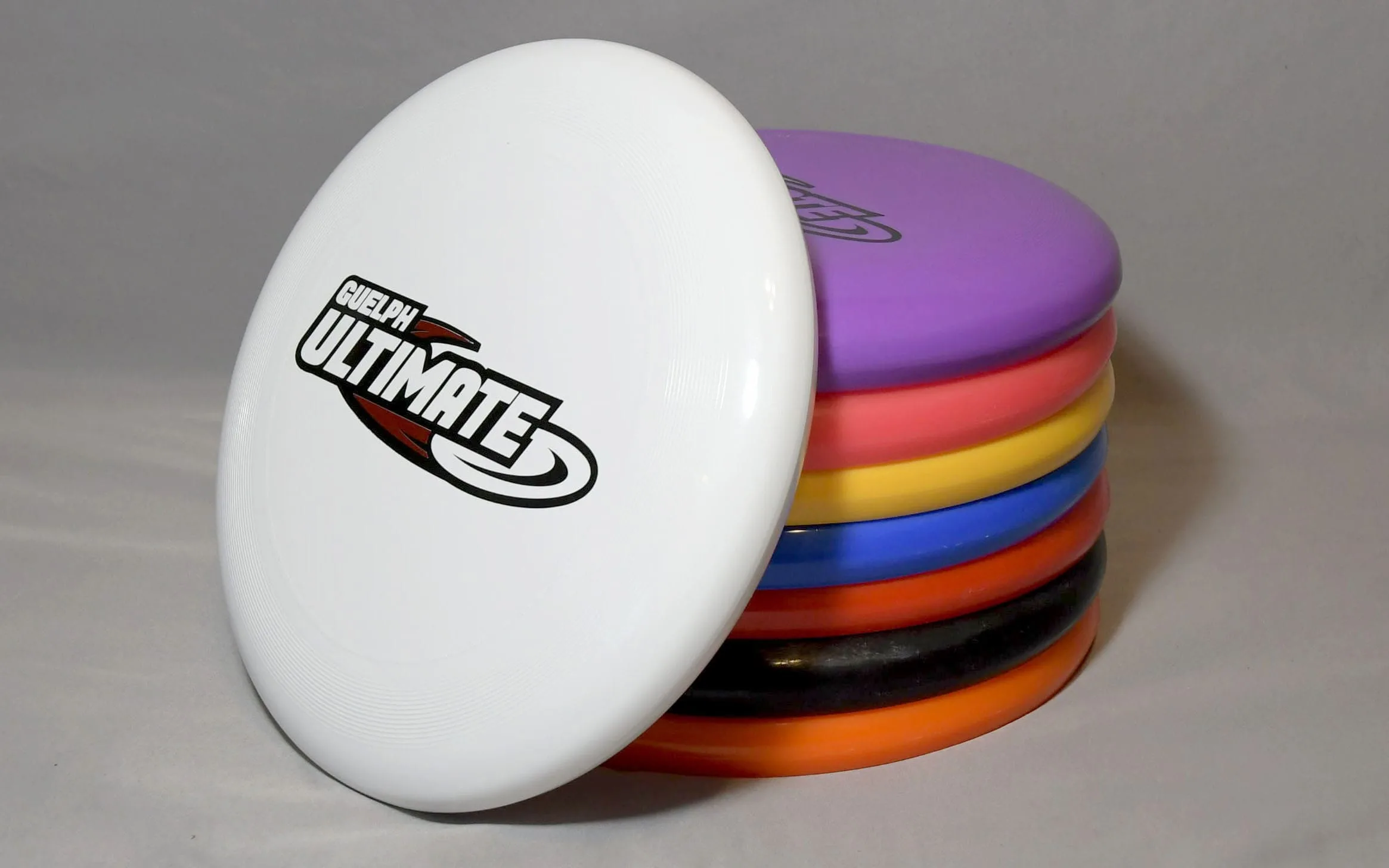
Ultimate Frisbees: $20.00
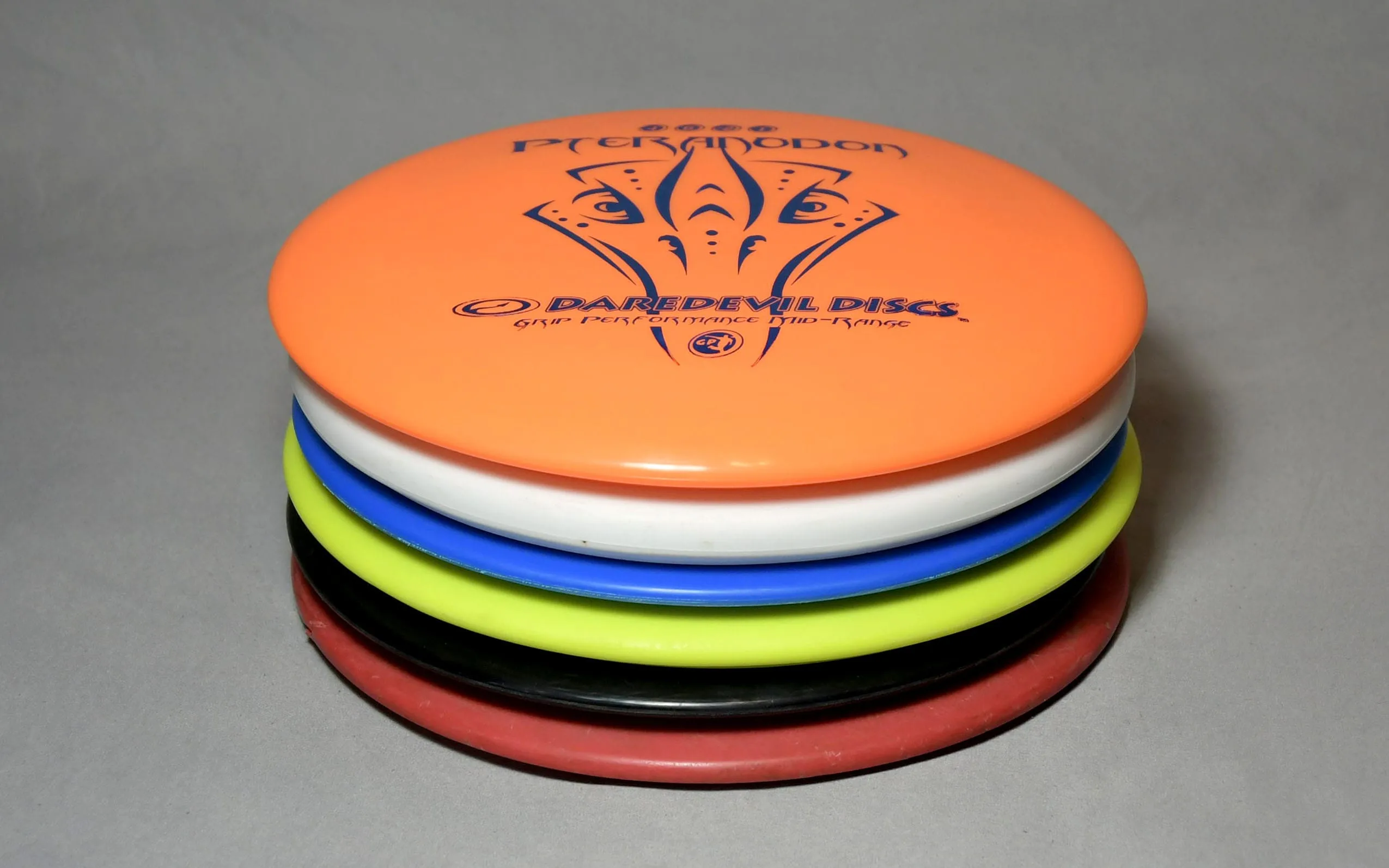
Disc Golf Discs: $20.00
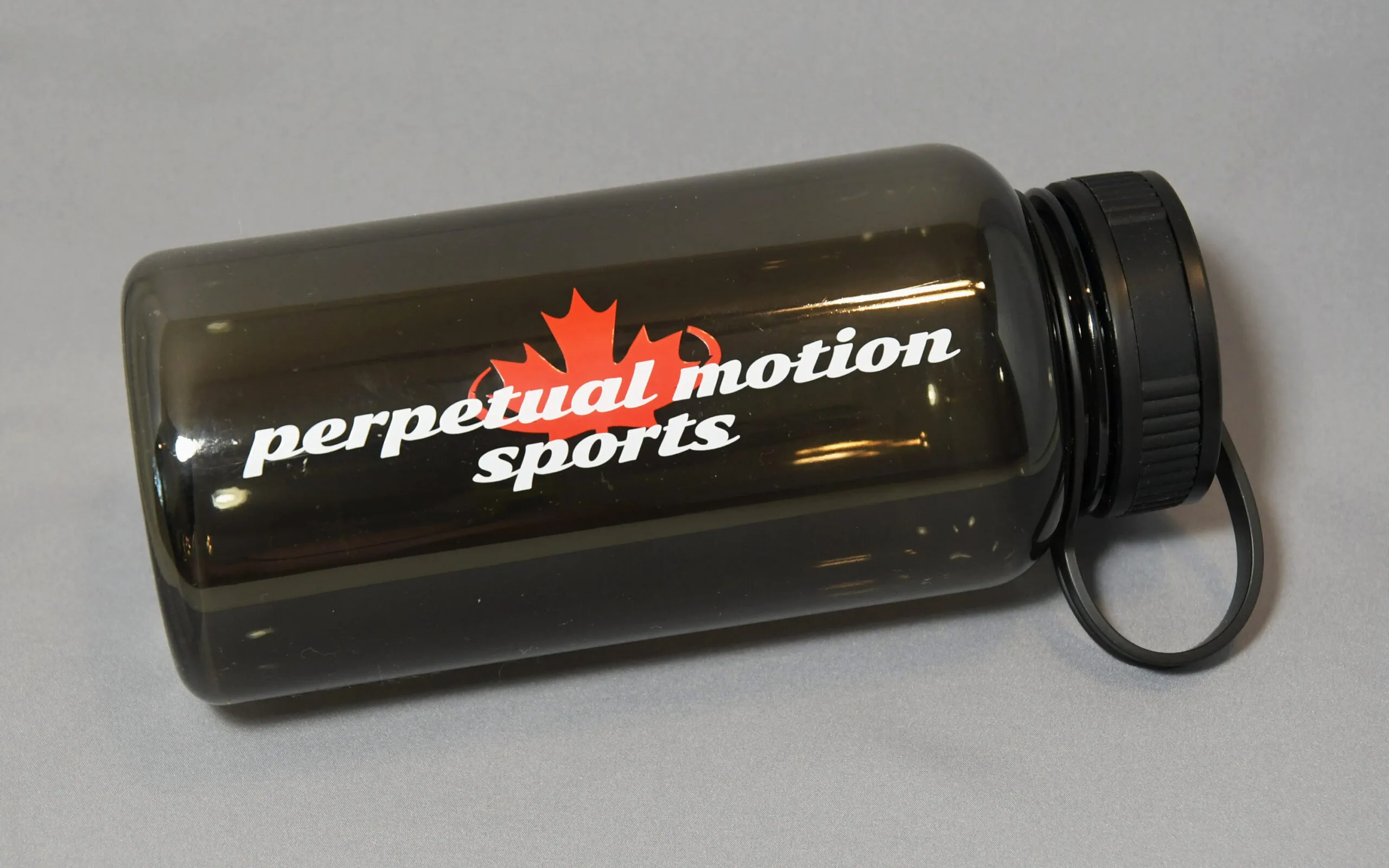
Water Bottles: $20.00
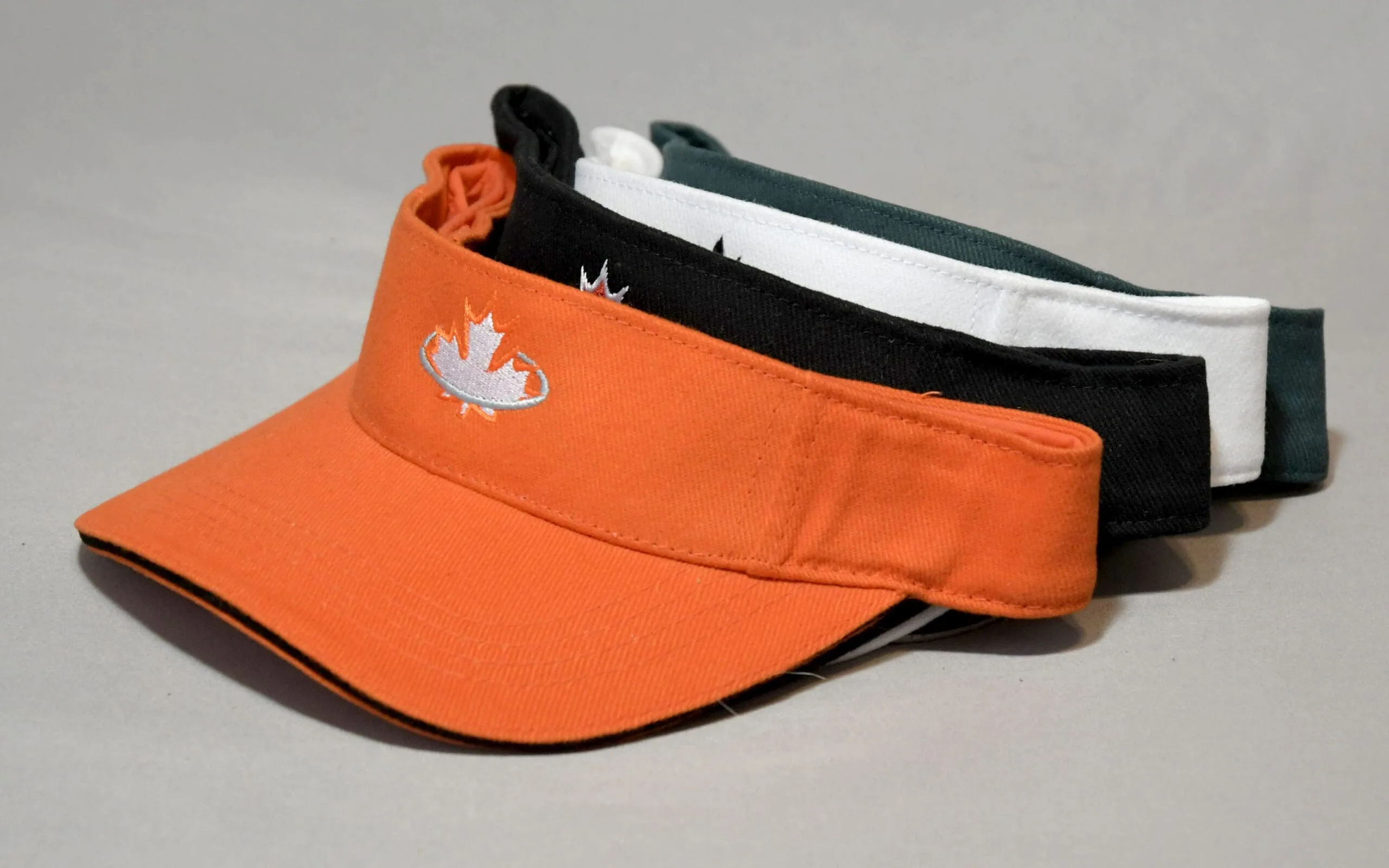
Visors: $20.00
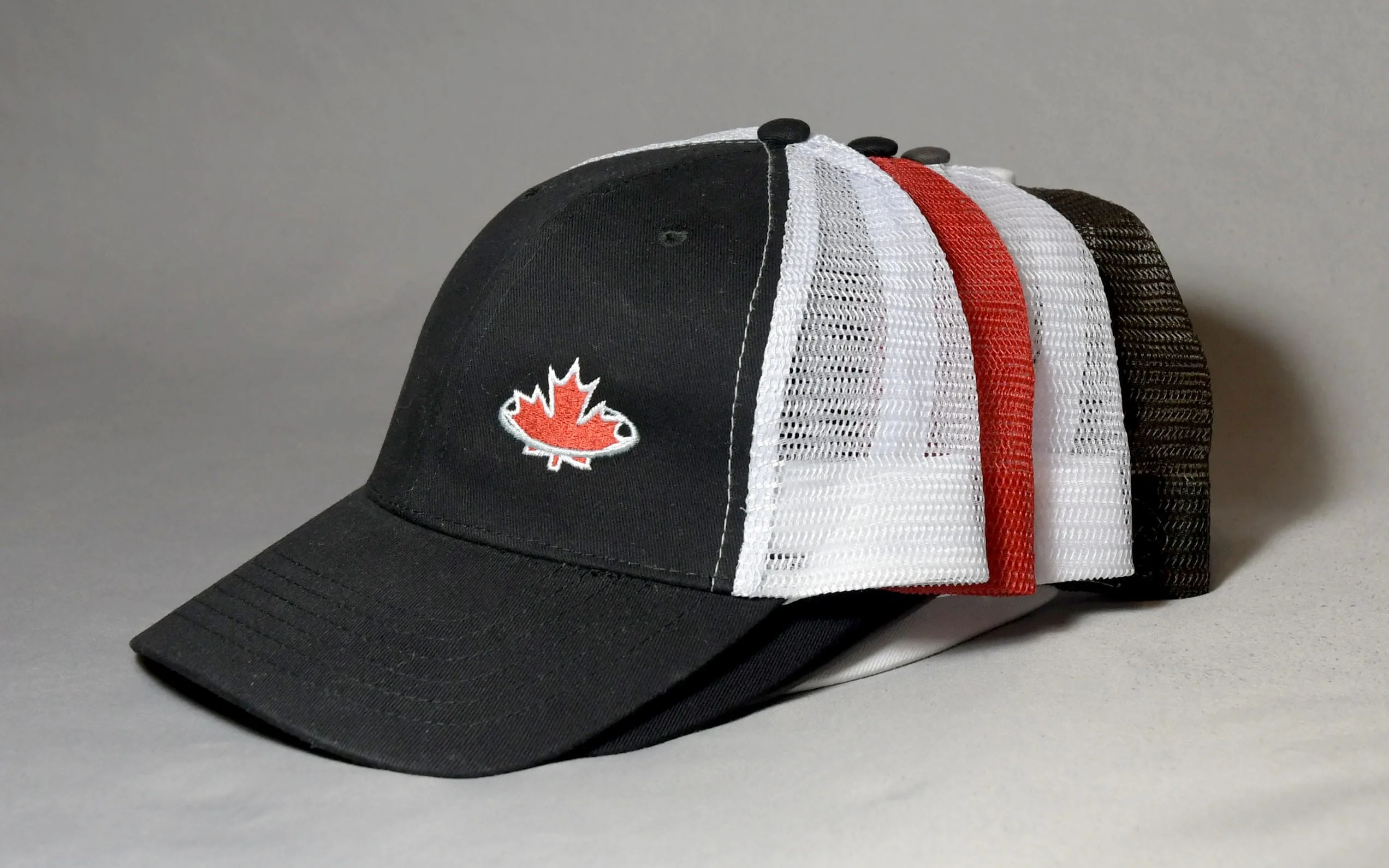
Trucker Hats: $20.00
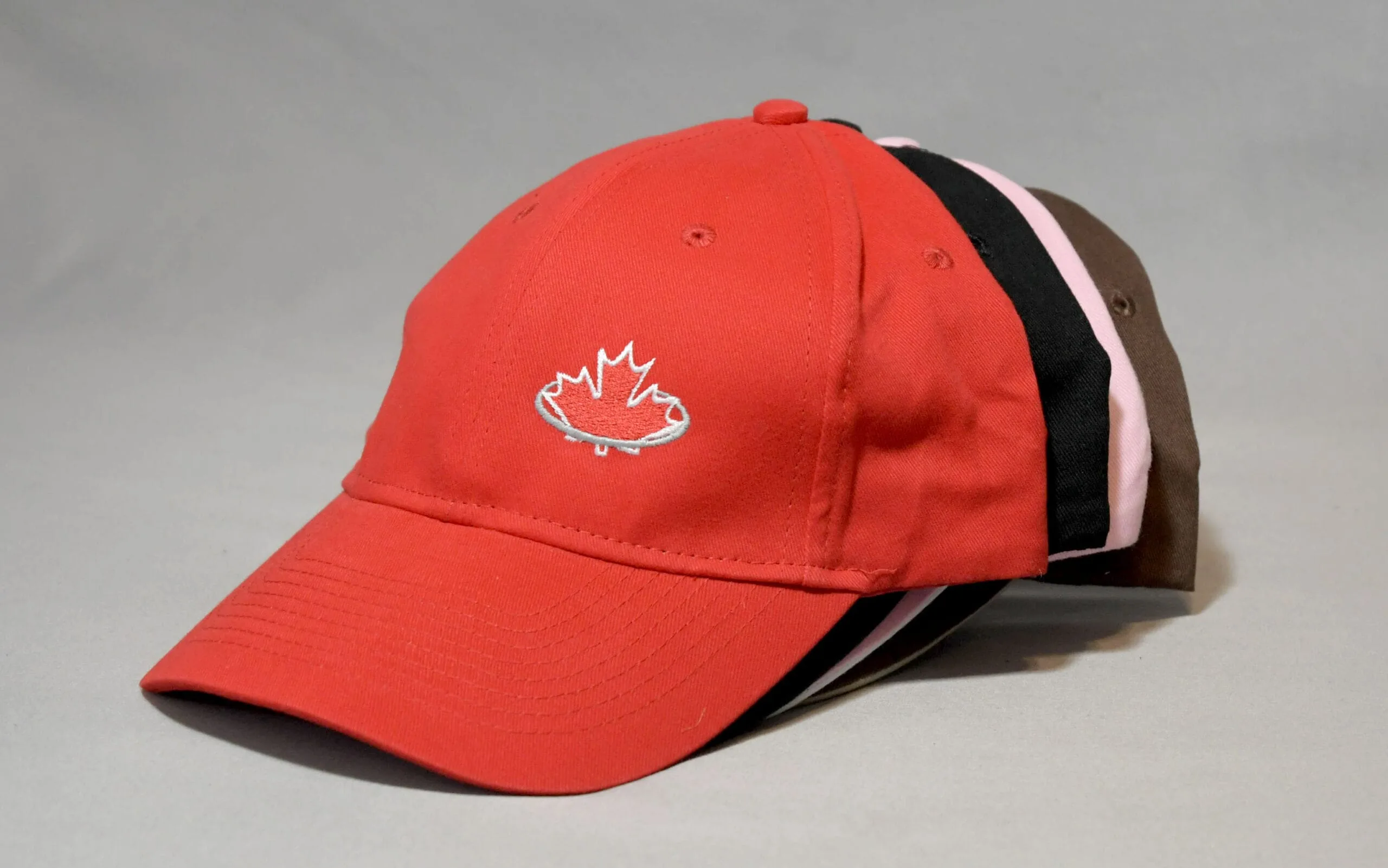
Hats: $20.00
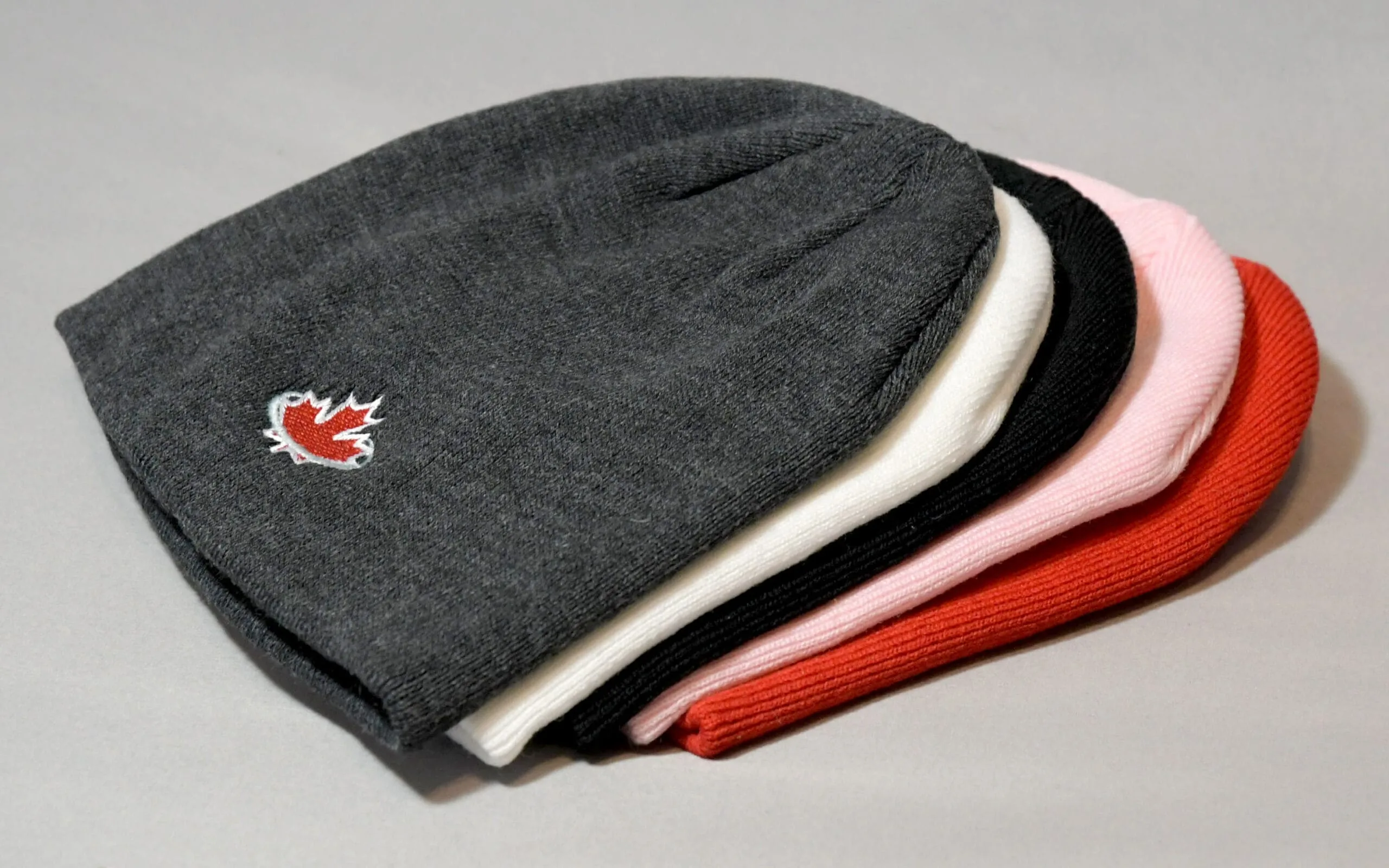
Toques: $20.00